
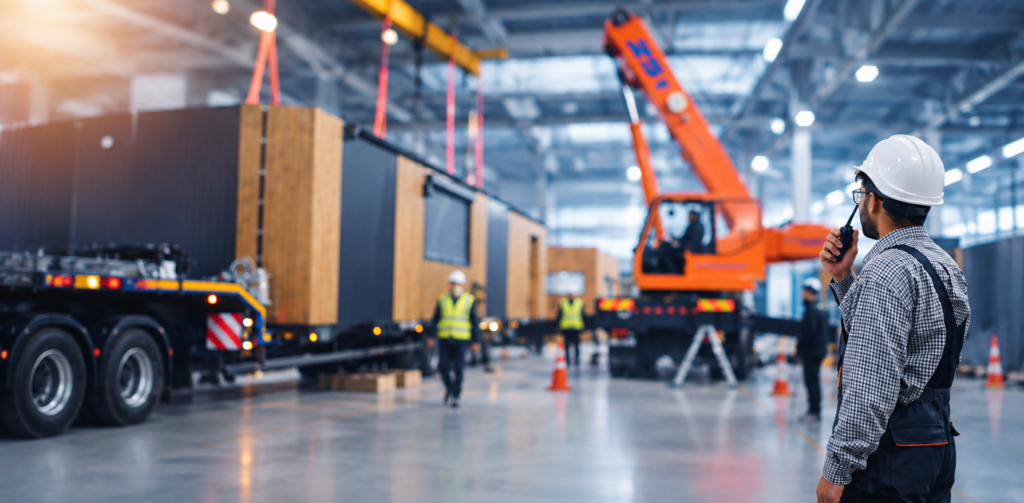
Moving CNC (Computer Numerical Control) machines requires careful planning, technical expertise, and specialised handling. These machines are precision-engineered equipment used in manufacturing industries, where even minor misalignment or damage can affect machining accuracy, productivity, and operational efficiency.
Whether relocating a CNC milling machine, CNC lathe, machining centre, or an entire manufacturing facility, proper preparation is essential to ensure safe transportation and successful reinstallation.
Unlike ordinary industrial equipment, CNC machines contain sensitive electronic components, precision spindles, control panels, hydraulic systems, and moving assemblies. Therefore, the relocation process must follow a structured approach, from initial inspection and machine disassembly to transportation, positioning, calibration, and testing.
In this guide, we explain how to prepare CNC machines for transportation and reinstallation while minimising operational risks and equipment damage.
Quick Answer: How to Prepare CNC Machines for Transportation and Reinstallation
Preparing CNC machines for transportation involves inspecting the equipment, backing up CNC programs and machine parameters, disconnecting electrical and utility connections, cleaning the machine, securing moving components, and packing sensitive parts safely. During transportation, use appropriate lifting equipment and protective restraints to prevent damage. At the destination, prepare the foundation and utilities, reinstall the machine, reconnect all systems, and perform levelling, calibration, and accuracy testing before restarting production.
Why Proper CNC Machine Preparation Matters
CNC machines are high-value industrial assets designed to operate with extremely precise tolerances. Their transportation involves more than simply lifting equipment onto a truck and moving it to another location.
Improper handling can result in:
- Damage to spindle assemblies and precision bearings.
- Misalignment of machine axes and guideways.
- Electrical and control system failures.
- Damage to hydraulic and pneumatic connections.
- Coolant or lubrication system leakage.
- Increased installation and calibration costs.
- Extended manufacturing downtime.
Proper preparation helps protect equipment, maintain its original performance specifications, and reduce unexpected expenses during relocation.
For businesses relocating manufacturing facilities, working with experienced industrial machinery relocation specialists can make the process safer and more efficient.
Step 1: Conduct a Pre-Move Machine Inspection
The first step is to assess the CNC machine’s current condition before beginning the relocation process.
A detailed inspection provides a reference point for identifying existing issues and checking whether any damage occurs during transportation.
What should be inspected?
- Machine frame and structural components.
- Spindle condition and tool holders.
- Linear guideways and ball screws.
- Electrical cabinets and control panels.
- Hydraulic and pneumatic systems.
- Coolant tanks and lubrication units.
- Machine enclosures and safety guards.
Record the machine’s operating condition, existing faults, and maintenance history. Take photographs of important connections, cable arrangements, and machine components before dismantling.
It is also important to document the machine’s make, model, serial number, dimensions, and total weight.
This information helps relocation teams determine the appropriate lifting equipment, transportation method, and installation requirements.
Step 2: Back Up CNC Programs and Machine Data
CNC machines depend on programmed instructions, configuration settings, and control parameters to perform manufacturing operations.
Losing this information during relocation can create significant delays and additional programming work.
Before disconnecting the machine, create a complete backup of important digital information.
Important data to back up includes:
- CNC part programs and machining instructions.
- Machine parameters and configuration settings.
- Tool offset and work offset data.
- PLC programs and settings, where accessible.
- Compensation tables.
- Alarm history and maintenance records.
- Controller-specific configuration files.
Store backups in multiple secure locations, such as an external drive and a secure company server.
Consult the machine manufacturer’s documentation or authorised service engineer to identify which parameters require specialist backup procedures.
Some machine settings may be protected or require manufacturer-specific restoration procedures.
Step 3: Disconnect Power and Utility Connections
Once the machine has been inspected and its data backed up, prepare it for safe disconnection.
Electrical and utility connections must be handled by qualified technicians following the manufacturer’s instructions and applicable safety procedures.
Key disconnection steps include:
- Shut down the machine using the recommended shutdown procedure.
- Isolate the electrical supply and apply lockout/tagout (LOTO) procedures.
- Verify that the machine is de-energised.
- Disconnect the main power supply through qualified personnel.
- Isolate hydraulic and pneumatic systems.
- Release stored pressure safely according to manufacturer instructions.
- Disconnect coolant, lubrication, and extraction lines.
- Label all cables, hoses, and connection points.
Proper labelling is particularly important when dealing with complex CNC machining centres containing multiple electrical and fluid connections.
Photographs and identification tags can help technicians reconnect everything correctly during reinstallation.
Step 4: Clean and Prepare the Machine
Before packaging, thoroughly clean the machine to remove manufacturing residue, metal chips, coolant, oil, and other contaminants.
Cleaning reduces the risk of corrosion, leakage, and contamination during transportation.
Recommended cleaning activities:
- Remove metal chips from the machine enclosure.
- Clean the worktable and surrounding surfaces.
- Drain or secure coolant systems as recommended.
- Remove accumulated cutting fluids and oil.
- Clean accessible guideways and machine components.
- Protect exposed precision surfaces against corrosion.
Pay particular attention to exposed metal surfaces, spindle areas, and precision guideways.
Apply suitable rust-prevention products where recommended by the manufacturer.
Avoid using cleaning chemicals or compressed air in ways that could damage sensitive electronic components, seals, or bearings.
Step 5: Secure Moving Components and Axes
One of the most important steps in preparing CNC machines for transportation is securing their moving components.
CNC machines contain multiple axes that move along precision-engineered guideways. Uncontrolled movement during transportation can damage these assemblies.
Before moving the machine, follow the manufacturer’s transportation instructions to secure:
- X, Y, and Z axes.
- Spindle heads.
- Tool changers.
- Rotary tables.
- Machine doors and movable guards.
- Automatic tool-changing mechanisms.
Use approved transportation locks, brackets, and restraints wherever specified.
The spindle and other sensitive assemblies may require additional protection depending on the machine design.
Never rely on ordinary straps or improvised supports to hold precision components in place. Incorrect restraint pressure can cause mechanical damage or misalignment.
Step 6: Dismantle Removable Components
Depending on the machine’s dimensions, weight, and transportation requirements, certain components may need to be removed before relocation.
Common removable components include:
- Tool magazines.
- Automatic tool changers.
- Control panels.
- Coolant tanks.
- Chip conveyors.
- External hydraulic units.
- Accessories and fixtures.
However, not every CNC machine requires complete dismantling.
The decision should be based on the manufacturer’s transportation guidelines, lifting points, transport dimensions, and the capabilities of the relocation team.
Each removed component should be labelled, documented, and packed separately.
Keep smaller accessories, fasteners, and mounting hardware organised in clearly identified containers to simplify reinstallation.
Step 7: Pack and Protect CNC Machine Components
Proper packaging protects CNC machines against vibration, moisture, dust, and physical impact during transportation.
The packaging method should be selected according to the machine’s size, weight, sensitivity, transportation distance, and environmental conditions.
Essential packaging considerations include:
1. Protective covers: Use suitable industrial covers to protect exposed surfaces from dust, dirt, and moisture.
2. Anti-corrosion protection: Apply manufacturer-approved rust-prevention materials to exposed metal components.
3. Vibration protection: Use appropriate cushioning and vibration-control materials for sensitive accessories and electronic components.
4. Electrical protection: Pack control units, circuit boards, and removable electronic components in suitable protective packaging, including ESD protection where required.
5. Wooden crating: Use appropriately designed industrial crates for removable components and accessories.
6. Moisture protection: Consider moisture barriers and desiccants when using enclosed packaging, particularly for long-distance or international transportation.
For large CNC machines, custom skids and engineered supports may be required to distribute the machine’s weight safely.
Packaging should never obstruct designated lifting points or compromise the machine’s structural stability.
Step 8: Plan Safe Loading and Transportation
CNC machines can weigh several tonnes, making loading and transportation a specialised operation.
The relocation team must evaluate the machine’s weight distribution, dimensions, centre of gravity, and designated lifting points before handling it.
Depending on the equipment, transportation may require:
- Industrial cranes.
- Forklifts with suitable load capacity.
- Hydraulic gantry systems.
- Machinery skates and rollers.
- Heavy-duty low-bed trailers.
- Specialised industrial transport vehicles.
Before lifting, confirm that the selected equipment has adequate capacity and is suitable for the machine’s lifting configuration.
The machine should be secured properly using approved lifting and tie-down arrangements.
Additional transportation considerations include:
- Route planning and clearance checks.
- Road restrictions and weight limits.
- Bridge and height restrictions.
- Weather conditions.
- Transit insurance.
- International shipping documentation, where applicable.
For international machinery relocation, customs requirements, export documentation, and import regulations should also be addressed before dispatch.
A professional industrial relocation company can coordinate the lifting, packing, transportation, and delivery requirements under a structured relocation plan.
Step 9: Prepare the New Installation Site
Preparing the destination site before the CNC machine arrives helps reduce installation delays and operational downtime.
The new location must meet the machine’s technical and environmental requirements.
Important site preparation requirements include:
| Requirement | What to Check |
|---|---|
| Foundation | Floor strength and load-bearing capacity |
| Flooring | Levelness and suitability for machine installation |
| Electrical supply | Correct voltage, frequency, and power capacity |
| Compressed air | Required pressure and air quality |
| Cooling systems | Coolant and temperature-control requirements |
| Ventilation | Adequate airflow and extraction |
| Space | Machine footprint and maintenance access |
| Environment | Temperature, humidity, and vibration conditions |
Some precision CNC machines require specially engineered foundations or vibration isolation systems.
Confirm the manufacturer’s foundation and installation specifications before positioning the machine.
Also ensure that access routes, doorways, loading bays, and internal movement paths can accommodate the equipment.
Step 10: Reinstall, Align, and Calibrate the Machine
Once the machine reaches its destination, the reinstallation process begins.
This stage is critical because even a properly transported machine may require alignment and calibration before returning to production.
The reinstallation process generally includes:
- Inspect the machine and packaging for transportation damage.
- Position the machine at its designated installation location.
- Remove transportation restraints according to manufacturer instructions.
- Reinstall any components removed before transportation.
- Reconnect electrical, hydraulic, pneumatic, and coolant systems.
- Level the machine according to manufacturer specifications.
- Check spindle alignment and machine geometry.
- Verify axis movement and positioning accuracy.
- Restore CNC programs and machine parameters.
- Perform calibration using appropriate measurement equipment.
Machine levelling is particularly important because an uneven foundation can affect machining accuracy and long-term mechanical performance.
Depending on the machine type, technicians may use precision levels, dial indicators, laser interferometers, ballbar systems, or other specialised instruments to verify alignment and performance.
Reinstallation and calibration should be performed by qualified CNC technicians or authorised service engineers.
Step 11: Conduct Testing Before Production
Before restarting manufacturing operations, perform comprehensive functional and accuracy checks.
The machine should not immediately return to full production after installation.
Begin with controlled inspections and tests to confirm that all systems are functioning correctly.
Important testing procedures include:
- Verify electrical connections and safety interlocks.
- Check lubrication and coolant circulation.
- Test hydraulic and pneumatic systems.
- Inspect spindle operation.
- Test tool-changing mechanisms.
- Verify axis movement and positioning.
- Check CNC control functionality.
- Run suitable trial programs.
- Inspect sample components for dimensional accuracy.
Where necessary, perform test cuts using appropriate materials and compare the results against the required machining tolerances.
Document the inspection results, calibration readings, and any corrective work completed.
Only release the machine for regular production once it meets the manufacturer’s specifications and the facility’s quality requirements.
Common Mistakes to Avoid During CNC Machine Relocation
Even experienced manufacturing businesses can encounter problems when machine relocation is not properly planned.
Here are some common mistakes to avoid:
1. Skipping the initial inspection
Without a pre-move inspection, identifying whether damage occurred during transportation becomes difficult.
2. Ignoring data backups
Failure to back up machine parameters and CNC programs can result in expensive recovery work.
3. Using incorrect lifting equipment
Insufficient lifting capacity or improper lifting points can create serious safety risks and equipment damage.
4. Poor packaging and protection
Inadequate protection exposes precision components to vibration, moisture, and physical impact.
5. Neglecting site preparation
An unsuitable foundation, insufficient electrical capacity, or limited access can delay installation.
6. Skipping calibration
A machine that powers on successfully is not necessarily ready for accurate production. Proper alignment and testing are essential.
7. Hiring inexperienced machinery movers
Frequently Asked Questions (FAQs)
1. How should CNC machines be prepared for transportation?
CNC machines should undergo a detailed inspection, data backup, electrical isolation, cleaning, and protection of moving components before transportation. Removable parts should be dismantled and packed separately where required. The machine must also be secured using approved lifting and transportation methods.
2. Can CNC machines be transported without dismantling them?
Yes. Many CNC machines can be transported as complete units, depending on their dimensions, weight, design, and transportation requirements. However, certain accessories or removable components may need to be detached to ensure safe handling and compliance with transport restrictions.
3. Why is CNC machine calibration necessary after relocation?
Transportation and reinstallation can affect machine levelling, alignment, and positioning accuracy. Calibration helps verify that the machine operates within the manufacturer’s specified tolerances and produces components that meet the required quality standards.
4. How long does CNC machine relocation take?
The duration depends on machine size, complexity, dismantling requirements, transportation distance, site readiness, and reinstallation procedures. Smaller machines may require less time, while large machining centres and complex production equipment may need several days or longer for complete relocation and commissioning.
5. What equipment is required to move heavy CNC machines?
Depending on the machine’s weight and dimensions, relocation may require industrial cranes, forklifts, hydraulic gantries, machinery skates, heavy-duty trailers, and specialised lifting accessories. All equipment must have suitable load capacities and be operated by trained personnel.
6. What should be checked before restarting a CNC machine after transportation?
Before restarting, inspect electrical connections, lubrication systems, hydraulic and pneumatic connections, spindle condition, axis movement, machine levelling, safety systems, and CNC parameters. Functional and accuracy tests should be completed before the machine returns to regular production.
7. Should CNC machine transportation be handled by professional machinery movers?
Yes. Professional machinery movers have the specialised equipment, technical knowledge, and experience required to handle heavy and precision-engineered industrial equipment. Their involvement helps minimise transportation risks, equipment damage, and installation delays.
Conclusion
Preparing CNC machines for transportation and reinstallation requires a systematic approach that combines technical planning, specialised handling, protective packaging, and accurate commissioning.
From conducting pre-move inspections and backing up machine data to securing precision components and performing post-installation calibration, every stage plays an important role in protecting equipment and maintaining manufacturing performance.
For businesses planning a factory relocation, machinery shifting, or international industrial equipment transportation, working with experienced industrial machinery relocation specialists can help ensure a safer and more organised process.
A well-planned relocation not only protects valuable CNC equipment but also helps businesses resume manufacturing operations with minimal disruption.